
Lesson 1.1
The Walk-Around Checklist
Students learn to walk around the car before every drive and check the tires, lights, windows and the space around it, so problems are found before the car moves.
What we teach
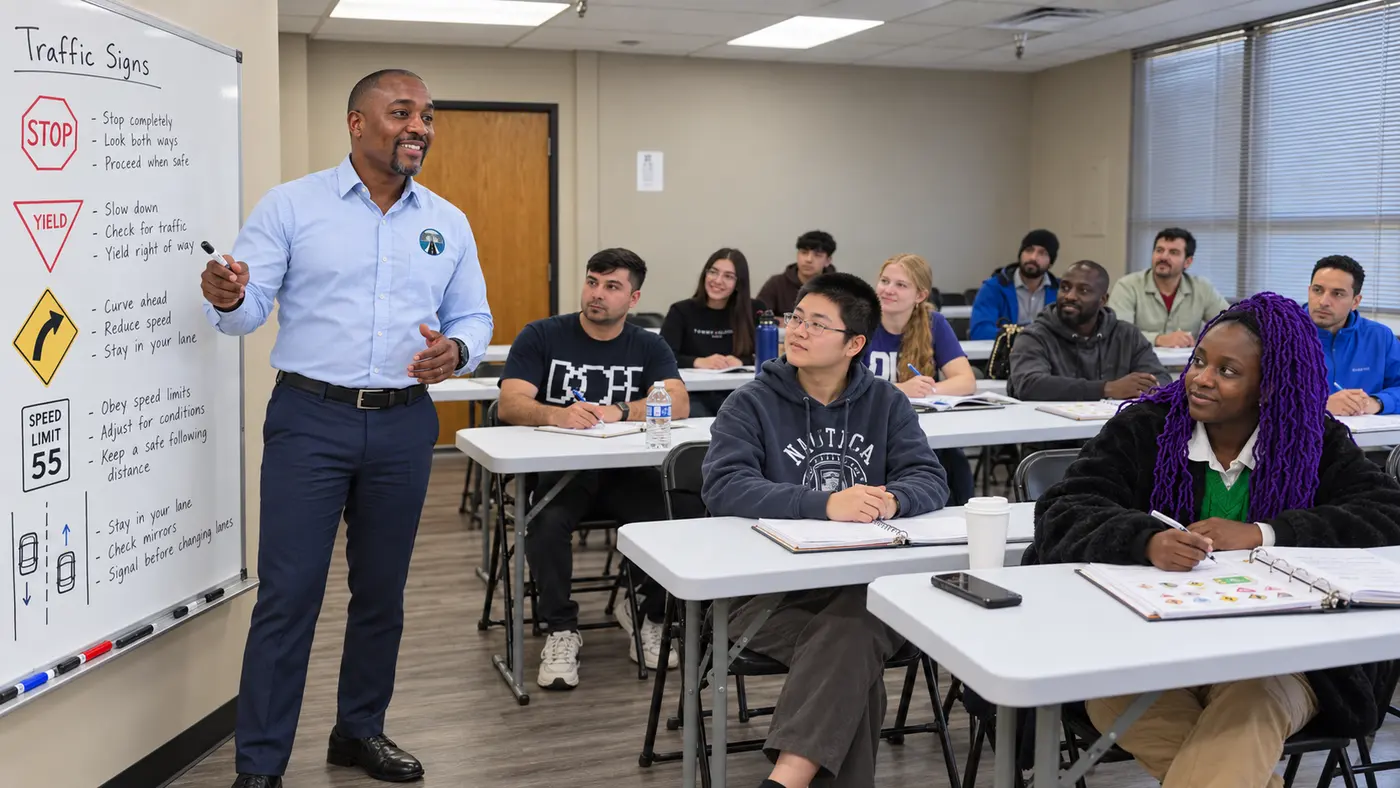
This page lists every lesson in the ProDrive Academy driver education course. There are 26 lessons in five units, and each one is explained below in plain words.
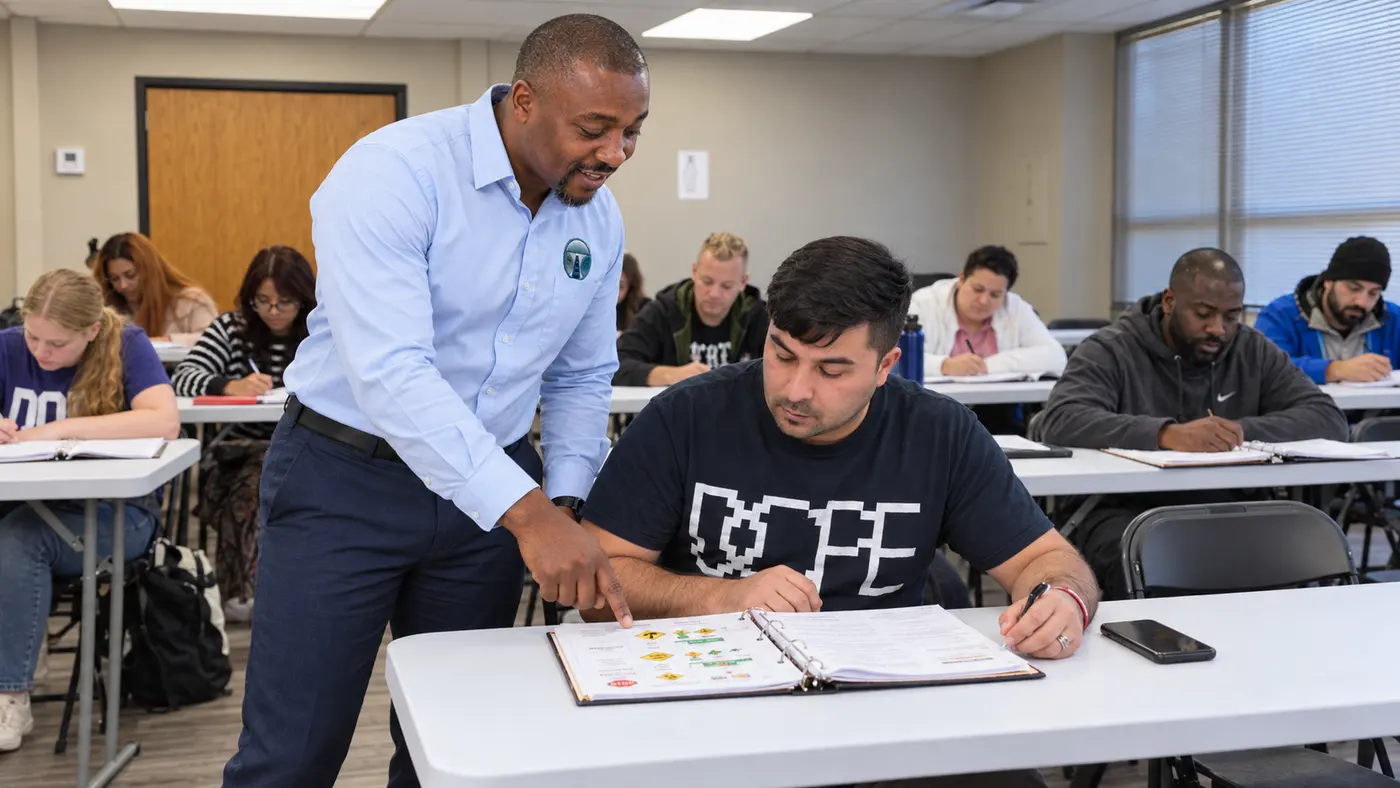
Teaching method
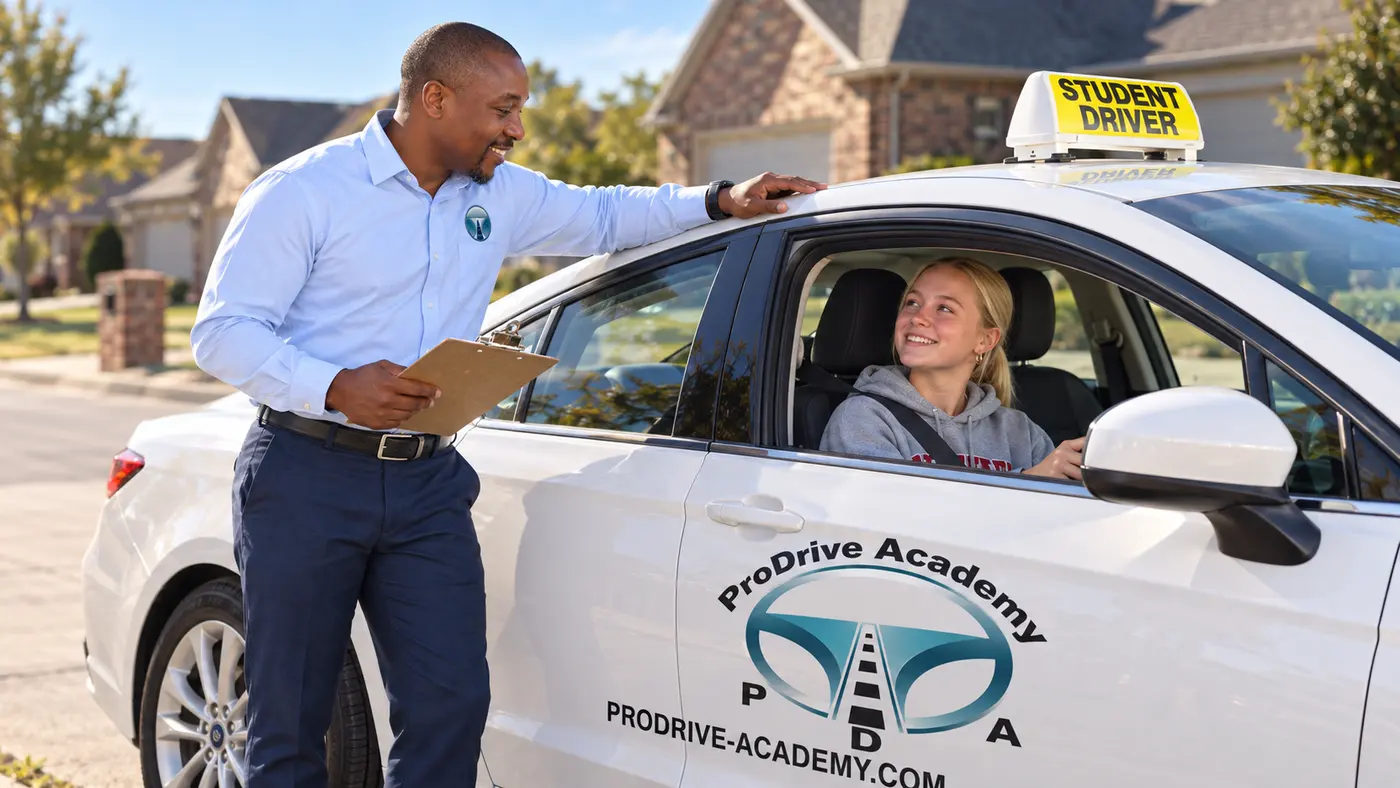
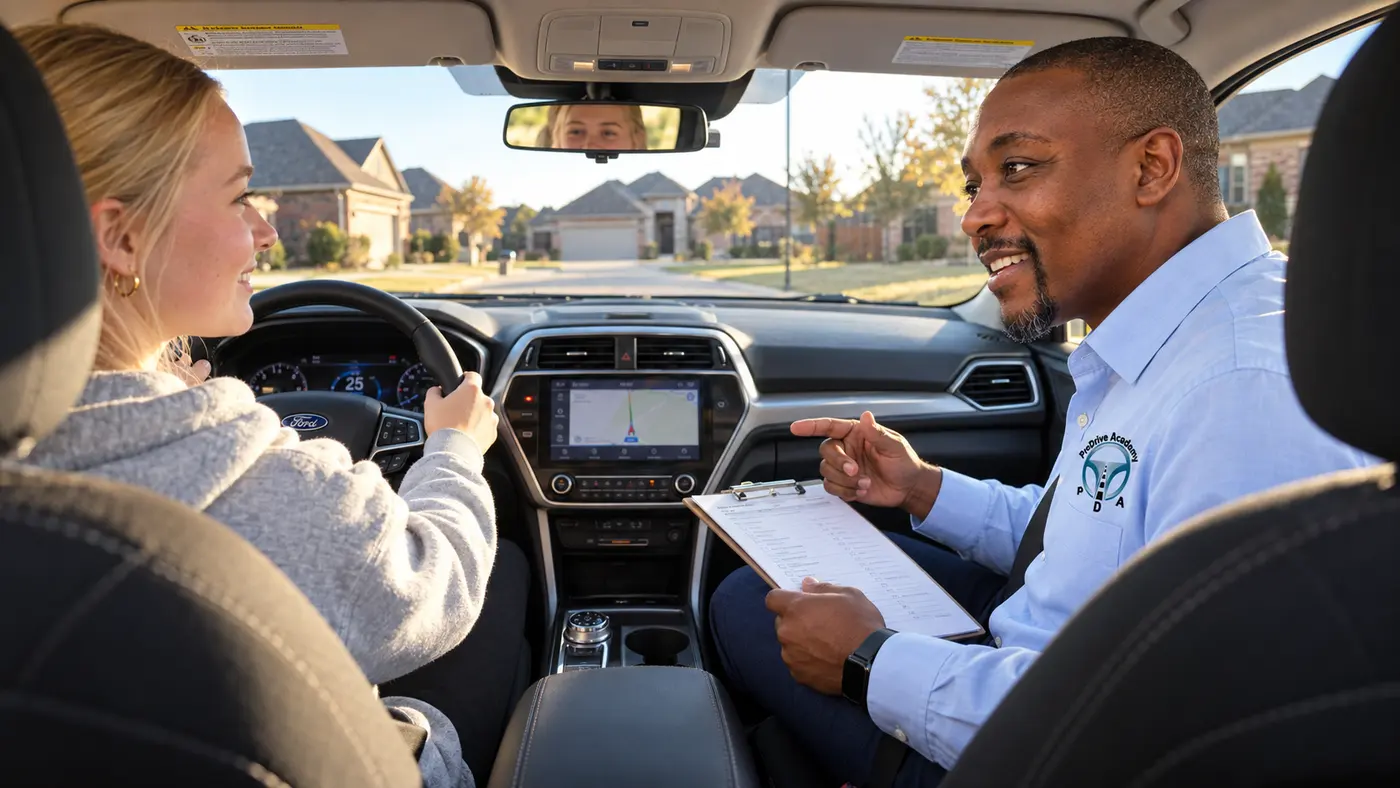
The course has two parts. Students learn the lessons in the classroom, then drive with an instructor beside them.
Unit 1
The course starts with the car itself. Students learn what to check, what each control does and how to set the car up before it moves.
Lesson 1.1
Students learn to walk around the car before every drive and check the tires, lights, windows and the space around it, so problems are found before the car moves.
Lesson 1.2
This lesson explains how a car responds when the driver steers, speeds up or brakes, so the way it moves is never a surprise.
Lesson 1.3
Students learn what the main controls, gauges and warning lights do and where to find them without looking away from the road for long.
Lesson 1.4
Students learn to notice what the car is doing through the steering wheel, the pedals and the seat, which is the base of smooth, steady control.
Lesson 1.5
This lesson teaches where to look while driving and how to judge distance and the room around the car.
Lesson 1.6
Students learn to keep the glass clear, set each mirror correctly and check the blind spots that mirrors do not show.
Lesson 1.7
Students learn the start-up routine in the right order, from adjusting the seat and fastening the seat belt to starting the car safely.
Unit 2
This unit covers moving, turning, stopping and passing, and explains what the tires are doing while the driver does each one.
Lesson 2.1
Students learn the first steps of driving: pulling away smoothly, steering, holding a lane and keeping a steady speed.
Lesson 2.2
This lesson covers U-turns and three-point turns, including how to choose a safe place to make one.
Lesson 2.3
Students practice smooth stops and firm stops, and learn why a car needs more room to stop at higher speeds and on wet roads.
Lesson 2.4
Students learn how to judge whether a pass is safe, how to signal, check and return to the lane, and when not to pass at all.
Lesson 2.5
This lesson explains what happens when the front or rear tires lose grip in a turn and how a driver stays calm and corrects it.
Lesson 2.6
Students learn that braking, speeding up and turning shift the weight of the car, which changes how much grip each tire has.
Lesson 2.7
This lesson shows that it takes time to see a hazard and act on it, which is why drivers look far ahead and leave space.
Unit 3
Roads are not always dry and bright. This unit prepares students for cold weather, slick roads and driving after dark.
Lesson 3.1
Students learn how to check tire pressure and tread, because the tires are the only part of the car that touches the road.
Lesson 3.2
This lesson teaches slower speeds, gentle steering and braking, and longer following distances on snow and ice.
Lesson 3.3
Students learn calm, simple steps to free a car that is stuck, without spinning the wheels and making it worse.
Lesson 3.4
This lesson covers using headlights correctly, slowing down and dealing with the glare of oncoming lights when it is harder to see.
Unit 4
Many risks on the road come from people, not from the car. This unit teaches students to manage their attention, their temper and their surroundings.
Lesson 4.1
Students learn why phones, food and anything else that takes their eyes, hands or mind off driving must wait until the car is parked.
Lesson 4.2
This lesson teaches students to keep their own temper in check and to stay away from an angry driver instead of reacting.
Lesson 4.3
Students learn everyday habits that keep them safe in and around the car, such as locking doors and staying aware of where they park.
Unit 5
The last unit explains why crashes happen, what to do if one happens and how the car protects the people inside it.
Lesson 5.1
Students learn the common reasons crashes happen, such as speed, distraction and following too closely, and how to avoid each one.
Lesson 5.2
This lesson walks through the situations where crashes often happen, such as intersections and lane changes, so students can spot them early.
Lesson 5.3
Students learn how to respond safely if they are in a crash, starting with staying calm and checking whether anyone is hurt.
Lesson 5.4
This lesson explains the safety technology in modern cars, so students know what it does and do not rely on it to do the driving.
Lesson 5.5
Students learn how air bags protect people in a crash and why they work best when everyone is seated properly and wearing a seat belt.
Prices
Every package includes unlimited classroom hours (10 minimum) and one-on-one time behind the wheel with a certified instructor.
$399.99
10 hours classroom and 6 hours behind-the-wheel. Road test not included.
Enroll See what is included$499.99
10 hours classroom, 6 hours behind-the-wheel, and the official state road test included.
Enroll See what is included$599.99
Everything in the road test package, plus a dedicated practice hour immediately before the examination.
Enroll See what is includedQuestions
Every ProDrive Academy package includes unlimited classroom hours, with a 10-hour minimum. A student who wants to go over a topic again can come back to class.
No. Every package also includes one-on-one time behind the wheel with a state-certified instructor. The number of hours behind the wheel depends on the package you choose.
Yes. Classroom teaching is available in English and in Spanish.
Yes. ProDrive Academy is approved by the State of Oklahoma to give the official road test, so students can test at the same school where they learned.
Guides
Plain answers to the questions that come up before, during and after driver's ed.
 PackagesHow to Choose a Driver's Ed PackageWhat each package includes, how many hours you drive, and which one fits a first-time driver.Read the guide Road testWhat to Bring to Your Oklahoma Road TestThe documents to bring on test day, when to arrive and which car you can use.Read the guide SchedulingRescheduling and Late Arrival RulesHow much notice a lesson or a road test needs, and what happens if you are late.Read the guide
 Start today
Enroll online in a few minutes, or call and we will help you choose.